
Breaking the Kill Chains
Iran’s attacks on U.S. sensors, shipping, and financial infrastructure reveal a broader strategy: disrupt the systems that power modern warfare.
Good morning,
Operation Epic Fury has entered its twelfth day with Iran demonstrating a growing understanding of the United States’ reliance on space-enabled capabilities within its sophisticated kill-chains.
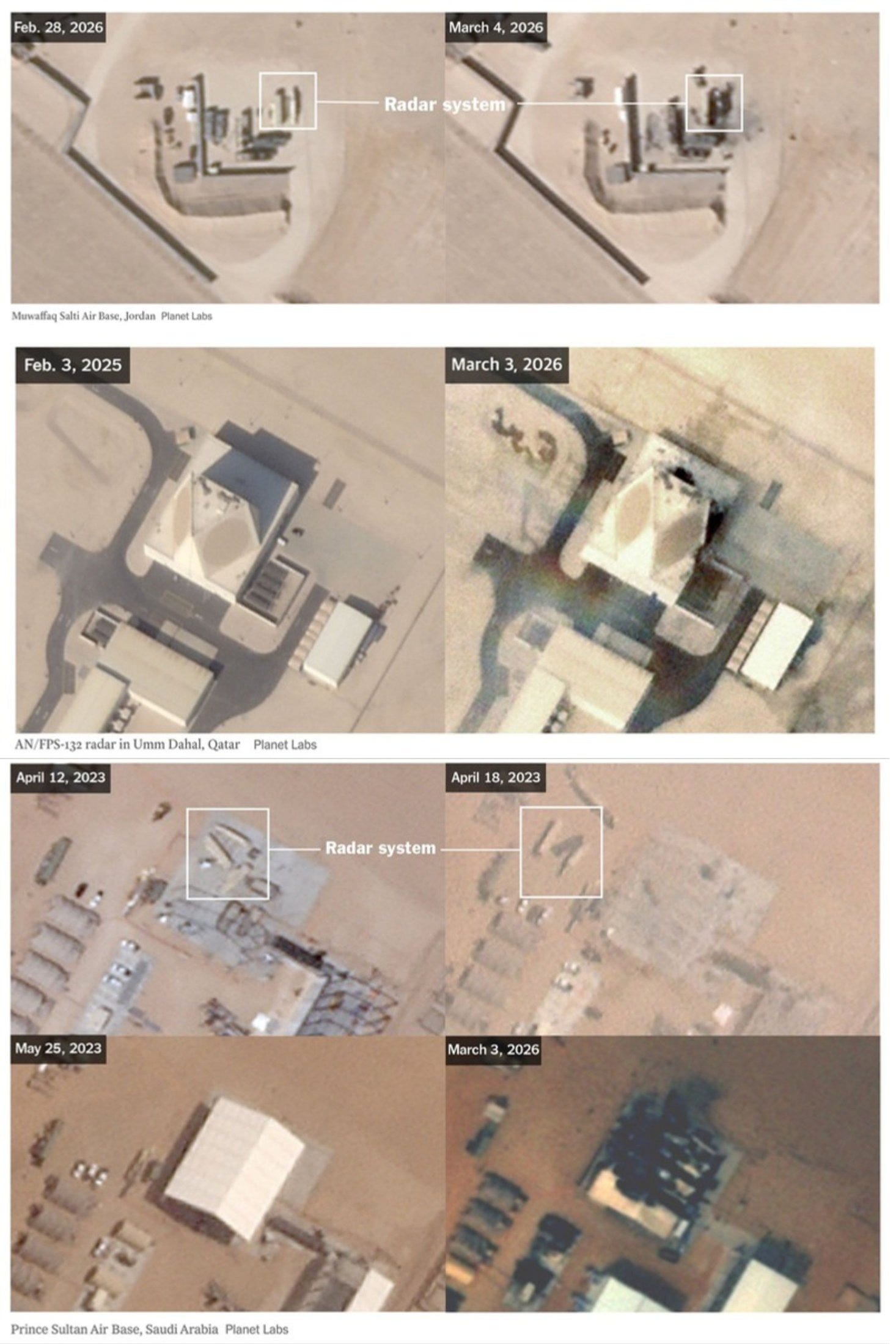
This has led Iran to target—apparently with some success—sensors like AN/TPY-2 radars, the primary radar supporting THAAD missile defense systems, in an attempt to blind U.S. forces and disrupt our kill-chains.
Commercial space is also playing a growing role in the targeting processes of both U.S. and adversary militaries. Earlier this week, Planet Labs announced that it would suspend updates to its commercially available satellite imagery for 96 hours. If the AN/TPY-2 sits at the front end of a kill-chain and targeting cycle (the Find, Fix, & Track phases), Planet Labs appears concerned about the back end—the Assess phase. The company justified the suspension as an effort to prevent adversaries from using the imagery to conduct battle damage assessment.
As we predicted last week, the next major phase of the war now appears to be unfolding in the Strait of Hormuz and surrounding waters. The U.K. Maritime Trade Operations center (UKMTO) has reported strikes against three commercial ships in and immediately adjacent to the strait in the past day. Iran has allegedly begun mining the straits, prompting increased U.S. military strikes on mine-laying boats, with at least 16 reportedly destroyed.
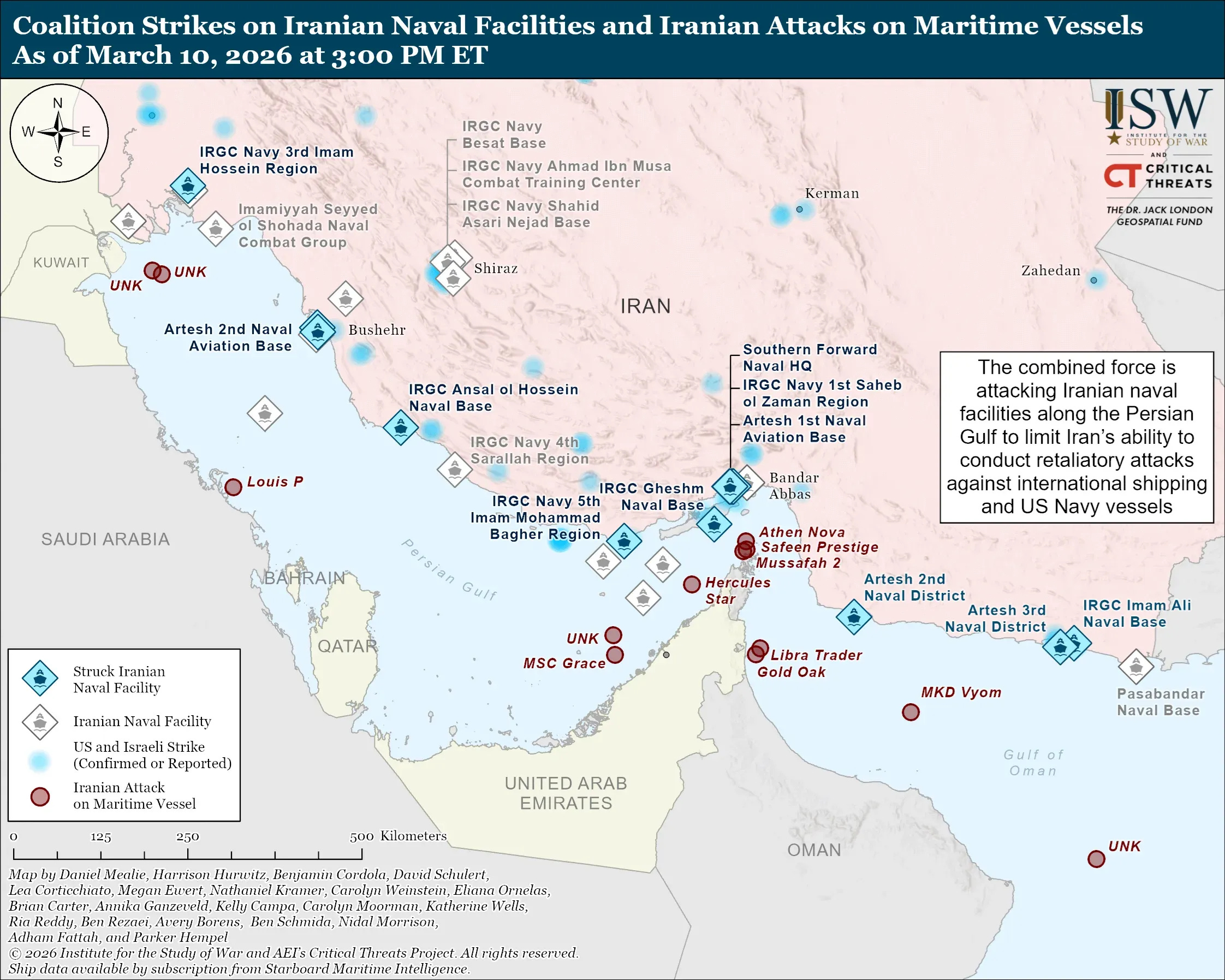
Concerns over economic warfare in the region briefly pushed oil prices over $110 per barrel earlier this week before settling back near $87, largely following remarks from President Trump that the war is ‘very complete.’ Subsequent comments from the President and from his Secretary of Defense Hegseth, however, have hinted operations extending for some time.
Regardless, Iran clearly sees an opportunity to impose economic costs by disrupting commercial traffic through the strait and through potential targeting of financial infrastructure. Attacks on shipping have already sent shockwaves through the oil markets, but a less discussed impact is the effect on global food prices.
Much of the fertilizer that U.S. and global farmers relies on urea and other chemicals from Persian Gulf countries. Somewhere between 33%-50% of global urea exports, and roughly 30% of global ammonia exports, transit the Strait of Hormuz.
Urea prices in America have already jumped to three-year highs, rising roughly 35%. Additional price shocks may be coming as urea producers in Asia begin shuttering operations due to the disruptions in Middle Eastern energy supplies.
Iran has also renewed threats to target U.S., Israeli, and allied financial institutions. Although no such attacks have yet occurred, the threats have already contributed to modest declines in banking stocks, with Wells Fargo down 1.35% and Goldman Sachs down 1%.
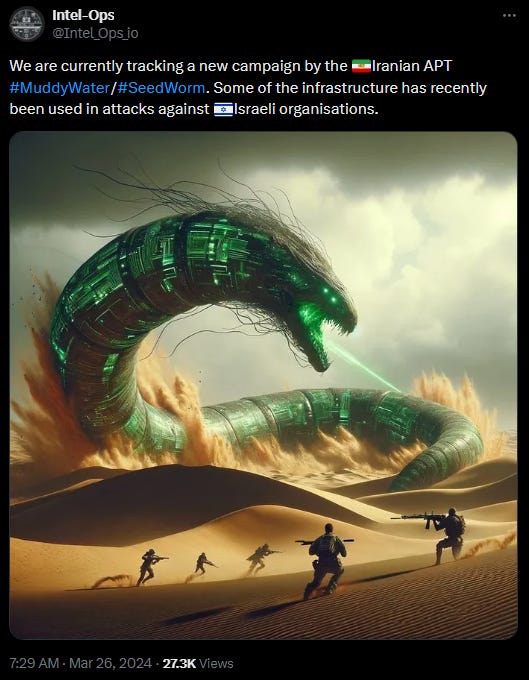
Banks began preparing for potential cyberattacks early in the conflict—a prudent move, though perhaps one that came late. An Iranian advanced persistent threat (APT) known as Seedworm (aka MuddyWater, Static Kitten, and Temp Zagros) was already active on U.S. networks including at least one American bank in February.
Given the increased and increasing threat of cyber attacks, it’s fortunate that yesterday the Senate finally confirmed Josh Rudd to serve as the Director of the NSA and Commander of U.S. Cyber Command.
So, what should we be taking from these events? Where should we be focusing our efforts?
Resilient capabilities to expand from kill-chains to kill-webs
As our adversaries identify and target critical nodes in our kill-chains, we must build redundancy into the architecture. If they target our terrestrial tracking and discrimination radars, we should replicate those capabilities in space.
The Space Force this week took a step in that direction this week by approving a missile-warning constellation. But warning is only the first step. The real objective must be persistent, high-fidelity targeting tracks that can support the broader kill-web.
Reversible counter-space effects
As our reliance on space grows, so too will our adversariers’ efforts to weaponize the domain—both to conduct targeting from orbit and to deny us access to and use of it.
The United States field capabilities that can defeat those denial efforts and disrupt the space-based nodes of adversary kill-chains. Wherever possible, those capabilities should produce reversible effects, allowing us to degrade hostile systems without escalating immediately to permanent destruction.
Critical resource stockpiles
Military planning does not happen in isolation. When the Chairman of the Joint Chiefs of Staffs provides his best military advice to the President and SecDef, he must be able to say that the nation possesses sufficient critical resources—whether food, oil, rare earth minerals, munitions, or other strategic inputs—for the base plan, all branch plans and sequels, and other contingencies.
The Department of Defense has appropriately focused on critical mineral stockpiles recently, but sustaining modern military operations requires a broader whole-of-government approach to securing and stockpiling other vital resources, as well.
Modern warfare is increasingly a contest over systems rather than platforms. The side that builds the most resilient kill-webs—across space, cyber, and the global economy—will ultimately determine the outcome.
Now, enough blabbering, let’s blast off into the news!
Operation Epic Fury
Trump signaled end to Iran conflict after a call with Putin (CNBC)
U.S. begins destroying mine-laying ships as Iran begins laying mines (NPR)
UKMTO reports 3 cargo ships struck by ‘projectiles’ in the past 24 hours in and around the Strait of Hormuz (TH)
Around 140 troops wounded in 10 days of Operation Epic Fury, Pentagon admits (MT)
U.S. destroys 16 Iranian mine-laying boats (MT)
Iran says warship IRIS Dena, which a U.S. submarine sank while returning from an exhibition in India, was unarmed; U.S. Indo-Pacific Command says ‘yeah huh, it was armed’ (AP)
France pledges 10 more warships to Middle East, escorts for Strait of Hormuz (NI)
Two Iranian warships take sanctuary in India and Sri Lanka (DN)
U.S. uses ballistic missiles to strike Iranian ships (TWZ)
News Headlines
Concerns of stagflation return… again (RT)
Oil prices seesaw as Trump sends mixed messages on Iran war (WP)
Anthropic sued to block Pentagon blacklisting over AI restrictions (RT)
Lithuania warns Russia is massing troops on NATO borders (U24)
U.S. Gaza plan is on hold as Iran war pauses disarmament talks (RT)
Satellites
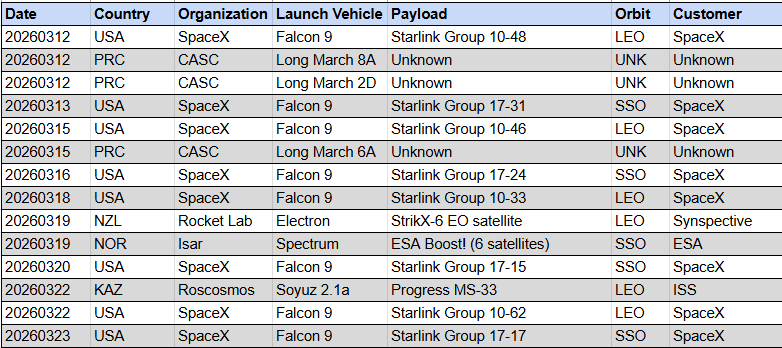
Launches

Upcoming Launches
Space News
A crewed Mars mission would counterintuitively be safest during a Solar maximum, as the Solar activity actually pushes out extrasolar radiation (ESA)
NASA’s DART spacecraft slammed Dimorphos asteroid so hard that it altered binary companion’s trajectory (SP)
Interstellar comet 3I/ATLAS is ‘bursting with methanol’ (SP)
U.S. Federal Space News
Air Force launches Minuteman III with multiple reentry vehicles (DN)
Space Rapid Capabilities Office adopts new approach to fielding cloud-based, C2 system (ASF)
Space Force clears design milestone, advances missile-warning constellation (DN)
Reentry of NASA satellite will exceed the agency’s own risk guidelines (AT)
Artemis program shakeup is having second- and third-order effects that NASA may not have thought through (AT)
Commercial Space News
NASA wants manual controls on lunar lander, SpaceX doesn’t think they’re necessary (AT)
BAE Systems‘ missile detection satellite passes early review (SN)
Planet Labs pauses satellite imagery to prevent adversaries from using it for battle damage assessment following attacks on U.S. targets (AT)
SpaceX raises launch prices 8% to $7,000 per kilogram (AT)
Starlab Space fully books commercial payload space on planned space station (SN)
Foreign Space News
The U.S. claimed it destroyed Iran’s space command; not that it ever posed much threat (DO)
China’s newest 5-year-plan designates space an ‘emerging pillar industry’ (SN)
An ESA-led consortium has connected an aircraft to a geostationary satellite using optical communications (TX)
Researchers at the German Research Center for AI have built TinyIceNet a small vision model for estimating sea ice thickness from SAR data (DFKI)
Cyprus becomes first to use E.U. GovSatCom secure communications service (ESF)
Deal Flow
Funds
VC General Catalyst is in talks to raise $10B across several funds (BBG)
Founders Fund is closing in on $6B for its Growth Fund IV and is turning investors away, with approximately 25% of funding coming from GPs (TC)
Scout Ventures closed an oversubscribed $125M Fund V to invest in companies at the intersection of national security and critical technologies (BW)
Pax Ventures has closed its debut fund at $50M to deploy into companies building technology that strengthens America at its foundations and ushers in Pax Technica (Pax)
Carlyle is working on a multibillion-dollar structured financing to seed its ninth flagship buyout fund and pay back money to LPs in its older funds (BBG)
VC
Aerospace and defense startup Sierra Space raised a $550M Series C--at an $8B valuation--led by LuminArx Capital Management (BW)
Space-station developer Vast raised a $500M round led by Balerion Space Ventures (TFN)
Austria based ENPULSION raised $26M in a growth funding round led by German investor Nordwind Growth to fuel an expansion into the U.S. market (ESF)
Reusable satellite startup Lux Aeterna raised a $10M seed round led by Konvoy (PRN)
PE / M&A / Exits / Other
Lithium and power developer Controlled Thermal Resources will merge with Plum Acquisition Corp IV in a $4.7B deal (RT)
Advent International revealed that the rejected takeover proposal for British aerospace engineering firm Senior valued the company at over $1.5B (RT)
Anduril to acquire space-tracking firm ExoAnalytic Solutions (SN)
Ondas, an autonomous robot intelligence provider, will merge with Mistral, a defense prime contractor, in a deal with undisclosed terms (OH)
Musk’s SpaceX is demanding early inclusion into the Nasdaq-100 index as part of plans to raise ~$50B at a $1.75T valuation in a Nasdaq IPO (RT)
Debt
Honeywell Aerospace raised $16B in a debut investment-grade bond sale to finance the completion of its spin-off (GF)
French satellite operator Eutelsat completed a $5.8B debt and equity financing (ST)
Exciting Opportunities
NASA has dusted off and republished its launch services RFP seeking risk category 2 and 3 launch services capable of delivering, at a minimum, a 250 kg payload to orbit at an altitude of 200 km and a launch inclination of 28.5 degrees (SAM)
Editor’s Picks
Per Aspera editor-in-chief Ryan Duffy explores the circular story about how the U.S.’ LUCAS is based on Iran’s Shahed which is based on a South African version of Israel’s Harpy which is based on a U.S.-German DAR. Whew!
Bipartisan think tank Committee for a Responsible Federal Budget issues warning over high debt making recovery from economic shock near-impossible, calls for ‘break glass’ plan.
Industrial Base Alpha’s Matthew Bernard compares the production and consumption rates on critical U.S. missile capabilities.
Hudson Institute senior fellow Can Kasapoğlu has provided one of the best assessments of the military situation of the ongoing war with Iran.
Lighter Side


Keep Building,
BOF