
Regeneration, Alliances, and Network Effects
Three events from this week demonstrate that military power increasingly depends on industrial resilience, trusted partners, and software-enabled ecosystems.
It’s been a wild week and as we go in to the weekend, we think the following three lessons are important for understanding the current state of defense and technology.
Also, it’s Mothers’ Day this weekend. Call your mom. Better yet, bring her some flowers.
Zombie Aircraft
This week, the Air Force completed the regeneration and refurbishment of a B-1B Lancer bomber aircraft (tail 86-0115) retired in 2021.
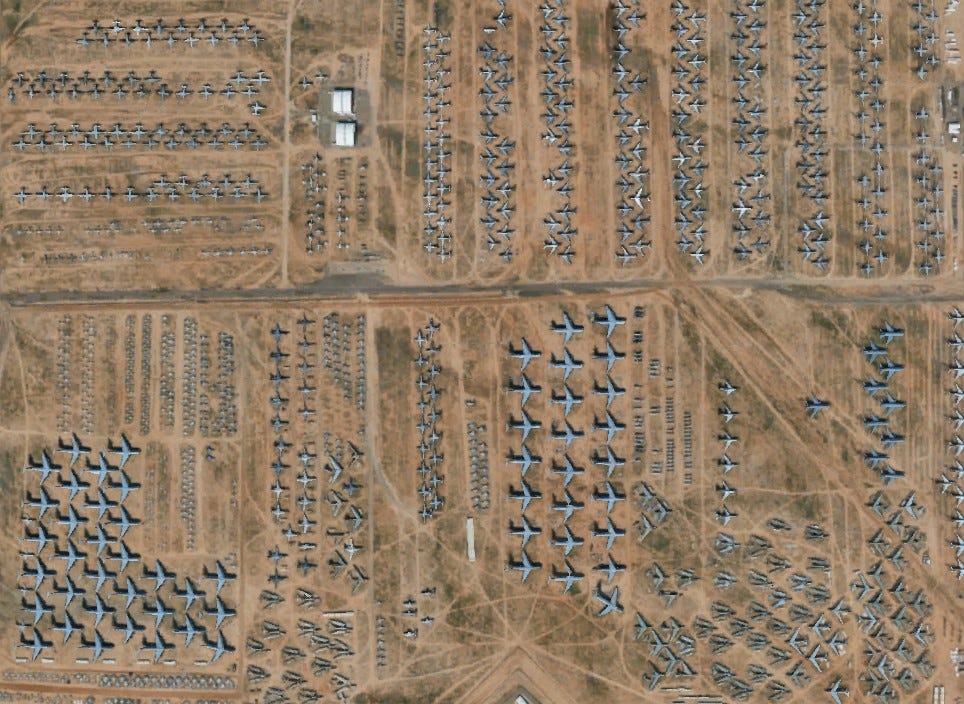
The aircraft was pulled back out of retirement a mere three years later, when in 2024 it began the process of refurbishment for reentry into the fleet.
86-0115 tells us several really important things about the Air Force today:
Capability regeneration: The Air Force maintains a critical ability to regenerate combat power.
A force incapable of regenerating itself eventually culminates regardless of its initial technological sophistication. The Air Force has clearly demonstrated that it CAN fix an old aircraft.
However, that it took nearly two years (essentially the same time as the B-1’s first low-rate production run) to refurbish the aircraft should serve as a critical warning for all. We can regenerate combat power, but we cannot do it at speed or under pressure. Repair functions less as a substitute for production than as a mechanism for buying time and preserving combat effectiveness under conditions of industrial stress. The Air Force regenerated this aircraft under permissive industrial conditions. Future wars may require regeneration while factories, logistics nodes, software infrastructure, and supply chains are themselves under attack.
Fleet age: The Air Force is proving it is increasingly reliant on aging platforms—especially for its strategic bombers.
The B-1 is one of three strategic bombers, along with the B-2 and B-52. The B-1 first flew in 1974 and entered service in 1986 (the program had temporarily been halted due to cost). The B-2 first flew in 1989. The B-52, which is the real work horse of our strategic air deterrent, is even older. It first flew in 1952 and has been in service since 1955. Its service life was recently extended into the 2050s.
The Air Force is attempting to address the age of the fleet through upgrades (like changes to the B-52’s engines), refurbishments (like the B-1), and through the development of the B-21 Raider (essentially a replacement of the B-2). Finally, the Air Force has added a budget line for an analysis of alternatives study for a new heavy bomber to replace the B-52. In other words, the Air Force seems to acknowledge it has an issue with the age of its fleet.
Logistics constraint: The greatest constraint of America’s strategic bombing capabilities is one of logistics. We lack the necessary fuel tankers to support major, global operations. The Air Force budget (while working to modernize the bombing fleet) largely neglects to expand its tanker fleet. It does seek to modernize it to some extent through additional acquisitions of KC-46s and divestment of older tankers, but it does not expand the fleet sufficiently.
Allies and Partners Matter
We’ll be generous and assume that the administration’s motivation to withdraw 5,000+ troops from Germany is more about rebalancing strategic interests and less about punishing an independent-minded ally that has criticized strategic missteps.
Nevertheless, the decision to do so is misguided and shortsighted.

The peace dividends following the Cold War saw the reduction of U.S. forces in Germany from roughly 250,000 (1989) across hundreds of sites to around below 100,000 immediately following the Persian Gulf War. That number continued to shrink over the next two decades until the Obama administration’s strategic ‘pivot’ towards the Pacific. This pivot saw further reductions in U.S. forces in Germany to about 60,000 in 2013, when the last U.S. armored units left. Today, the number of U.S. troops in Germany has dwindled to about 35,000.
What’s even more important is that the United States returned the infrastructure that it codeveloped with Germany back to the host country.
And we paid for that costly mistake almost immediately.
In 2014, Russia invaded Ukraine and we remembered as a country that Russia is not our friend (something we seem to like to forget periodically) and that while they are not our ‘pacing threat’ they remain a credibly capable adversary whose interests do not align with ours.
At the NATO Wales Summit, the United States committed to Operation Atlantic Resolve and had to find a way to surge an additional 6,000 forces and their equipment back into Europe—requiring us to pay to lease facilities and bases that we previously had on free lease.
Today, the Trump administration is making the same mistake all over again, while simultaneously continuing a pattern of giving Russia strategic latitude and political benefit of the doubt.
The drawdown of 5,000 troops won’t have an immediate adverse effect on American national interests. This is especially true if it’s just the redeployment of the rotational brigade (as this mitigates the need for expensive MILCON construction of new facilities in the United States). Nevertheless, it hurts the local German economies, damages military-to-military relations, and creates the same risk that President Obama’s administration created in 2013.
And while the current administration seems to ignore the risk by believing they can coercively strongarm allies into compliance, we’ve seen that backfire this week, too.
President Trump suspended Operation Epic Fury’s little sidekick Project Freedom after a single day. Why? Because his administration neglected to secure access, basing, and overflight (ABO) agreements with two key partners in the region: Kuwait and Saudi Arabia. Instead, the administration assumed that these partners would just ‘fall in line’. But this demonstrated incredible hubris and ignorance; ignorance of the two-level games that other national leaders have to play and of coalition warfare.
All it would have taken was a little attention, a little diplomacy, a little recognition that coalition warfare cannot function through coercion alone because war itself is an extension of policy.
A Dutch Defense Tech’s Prescience
This week, a Dutch startup, Intelic, demonstrated one of the clearest understandings of defense tech dynamics that we’ve seen since Anduril.
Much of Anduril’s early magic came from its understanding of the rise of software in defense. As such, they were able to tell the government that they were a hardware company, while simultaneously telling investors that they were a software company. The secret was to embed their LatticeOS into their hardware to create a growing dependence on the software and a certain network effect when the government and other companies used LatticeOS.
Intelic has taken a page out of that playbook. This Dutch company has created a marketplace through which other drone companies can sell to various European militaries.
The Marketplace model is itself a genius one as it allows Intelic to spread the burden of business development to the other companies on the marketplace; allows militaries to make smaller, faster, and more numerous procurements rather than relying on the equivalents of programs of record; and can create multiple streams of revenue.
But what elevates this move is that Intelic is providing their Nexus command and control software to all of the systems that they sell. This clever move builds a certain network effect over time. The more that a military buys systems running on Nexus, the more powerful that software becomes. The military's dependence on that software grows, opening more opportunities to Intelic, and creating a moat that other companies could struggle to penetrate.
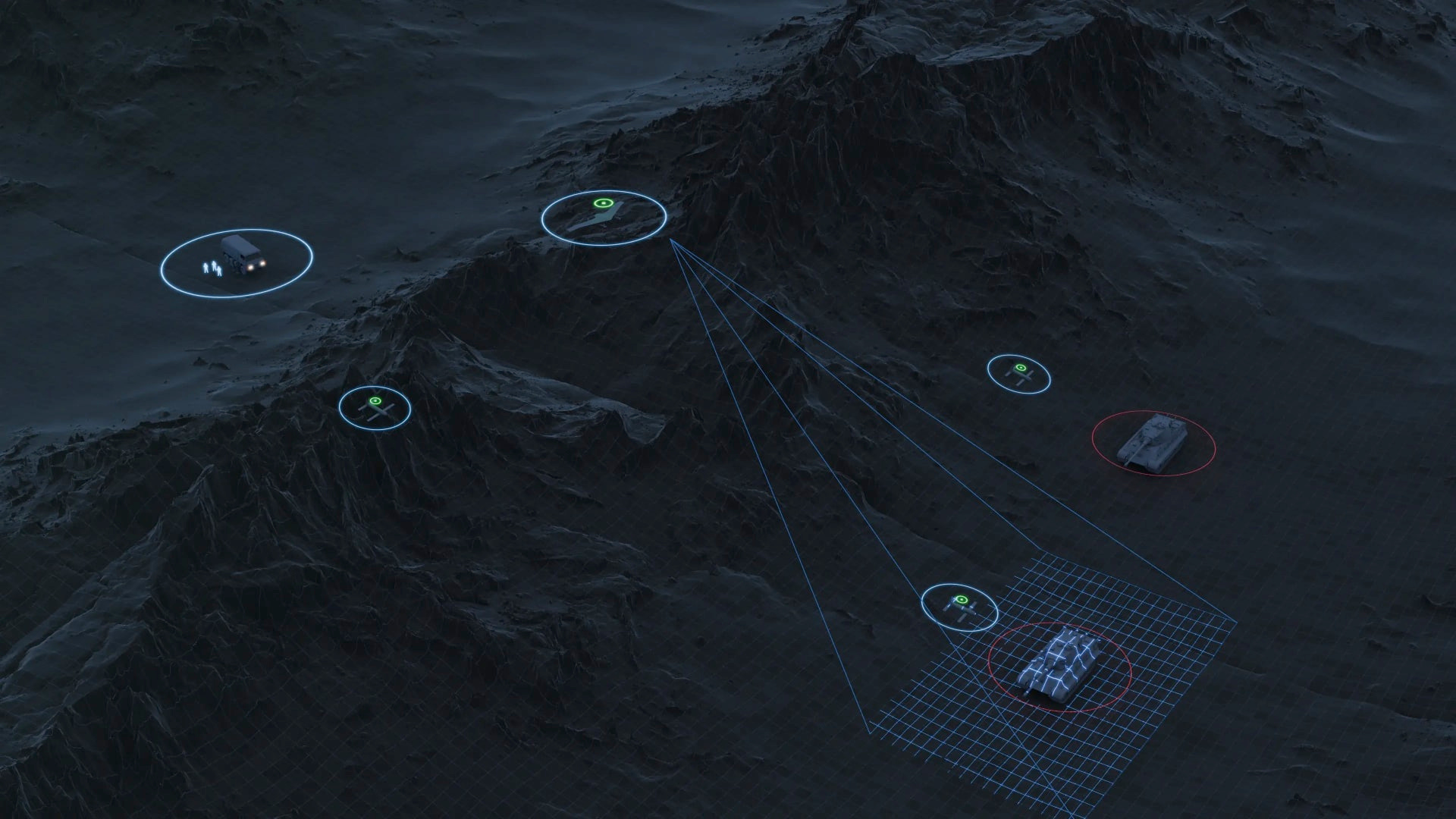
The most important defense technology firms of the coming decade may not be those that build the best individual systems, but those that become the connective tissue through which other systems operate.
Defense technology is difficult. It’s likely harder in Europe than in America. Yet, there are certain steps that companies can take to make it easier. Intelic is attempting two of those steps: marketplaces and network effects.
Operation Epic Fury
Saudi Arabia, Kuwait refusal to support Project Freedom may have led to POTUS pausing the operation (TOI)
U.S. intel says Iran can outlast Hormuz blockade for months (WP)
France moves aircraft carrier to Red Sea with eye on Strait of Hormuz mission (AP)
Details are emerging of most recent U.S. 1-page proposal for peace including short-term moratorium on enrichment (TH)
U.S. forces fire at, disable Iran-flagged tanker trying to evade blockade (MT)
U.S. and Iran exchange fire, POTUS continues saying war will ‘be over quickly’ (DN)
Gulf states lift restrictions that forced pause to Project Freedom (WSJ)
U.A.E. is sneaking oil tankers through Hormuz (RT)
News Headlines
Germany says U.S. drawdown should spur Europe; top U.S. Republicans worry (RT)
SecState Marco Rubio visits Pope Leo to smooth over relations (AP)
ODNI tried to erase FOIA records; the internet had them archived (BBG)
Most Americans support age limits for Congress (NPR)
SecDef Hegseth’s loaded language results in Senatorial accusations of antisemitism (NYT)
U.S. fuel exports hit a record high (FT)
Commerce Secretary Lutnick says he doesn’t remember why he took family to Epstein island (BBG)
Dueling Victory Day ceasefires for Ukraine war collapse almost immediately (DN)
Defense & Dual-Use Technologies
White House counterterrorism strategy envisions expanded offensive cyber operations (NG)
The Army wants to boost its RDT&E budget by 13% to $2.1B (DN)
Army fires Tomahawk missile from new Typhon launcher (DN)
Army wants to develop new missile interceptor that costs <$250K (WSJ)
3D printed rocket fuel successfully tested enabling lighter missiles and faster production (THW)
Coast Guard to establish special operations command (MT)
The Air Force is resurrecting retired, cannibalized aircraft (ASF)
Threat Tech
China’s massive stealth flying wings spotted together at secretive test base (TWZ)
Russia is ramping up efforts to kill opponents across Europe: intelligence officials (AP)
Russia’s Khabarovsk submarine to carry Poseidon (aka Kanyon) nuclear-armed, nuclear powered torpedo (NN)
Foreign Defense Tech
NATO nations size up an interceptor-drone bazaar where low price is everything (MT)
Dutch startup Intelic sets up drone marketplace for European militaries (DN)
German defense minister laments long-range strike ‘gap’ caused by planned U.S. drawdown (DN)
German experts: European defense autonomy is in reach for €500M (DN)
Malaysia looks for clarification from Norway after Naval Strike Missile order falters (BD)
Pakistan gets Chinese submarine to boost naval capability (DN)
Turkey unveils new ICBM with 6,000km range (BBG)
Defense Industry
Raytheon gets largest ever SharpSight radar order (TDB)
RTX, Ursa Major executives meet suggesting possible developing partnership for munitions (TDB)
Autonomous Systems
Army awards AeroVironment prototype agreement for latest Switchblade variant (DS)
Finance & Deal Flow
VC
XBOW, an autonomous offensive security company, raised a $35M Series C extension from Accenture Ventures, DNX Ventures, NVentures, and more (BW)
Lithosquare, a deep tech startup applying foundational AI to mineral exploration, raised a $25M seed round led by World Fund (PU)
PE / M&A / Exits / Other
Electrical components-focused industrials firms Hubbell agreed to acquire industrials rollup NSI Industries from Sentinel Capital Partners for $3B (WSJ)
Exciting Opportunities
DARPA is looking for smarter autonomous systems (SAM)
The agency is also looking for decentralized, self-organizing swarms (SAM)
The Marine Corps is looking for advanced optics to incorporate in its new MADIS air defense system (SAM)
The Navy is upgrading its SONAR systems including acoustic / non-acoustic sensors, software, and more (SAM)
Lighter Side

Keep Building,
BOF