
Congress is Finally Preparing for the Next War
The FY2027 NDAA embraces drones, AI, quantum technologies, resilient supply chains, and distributed manufacturing—but the real story is Congress beginning to think about war as a system.
Last night, the House Armed Services Committee completed its full committee markup of the FY2027 NDAA, reporting the bill to the full House by a 44-12 vote.
This year’s mark is all about defense technologies. Below we’ll list what we found to be the most important defense tech related amendments, but first we want to summarize it.
Drones, Autonomy, and AI
The HASC has gotten it absolutely right on drones this year, with heavy emphasis on expanding drone and counter-drone capabilities. For example, the mark calls for the Army to establish a test battalion to scale long-range one-way attack systems. It directs a strategy for the development and fielding of unmanned surface vessels and demands an acceleration of the development of extra large unmanned undersea vessels. It requires the DAWG to begin actually developing doctrine for the employment of drones and drone formations. And perhaps the most important, yet understated, thing is this mark mentions for the first time cross-domain autonomous systems.
Regarding the non-hardware aspects of autonomy, the mark begins addressing concerns of ethical autonomy by enforcing human responsibility and accountability for lethal effects involving autonomous systems. It also establishes as the default ‘government purpose rights’ to data, software, and software documentation—helping clarify longstanding questions regarding ownership and control of software, data, and related technical artifacts delivered under contract. Congress also directed a review of open-weight AI models, a notable acknowledgment that future military AI may depend as much on software ecosystems and model accessibility as on hardware.
Finally, we see the requirement for the military to include critical infrastructure and operational technologies into major combatant command level (Tier 1) exercises. This amendment essentially acknowledges that data centers, cloud infrastructure, AI systems, and operational technologies are now warfighting infrastructure.
Space and Electromagnetic Warfare
We’re hesitant to lump these two together as they continue to diverge as domains. There’s no language in the mark to acknowledge the EMS as a separate domain, so we’ll keep them together for this review. Interestingly and tangentially related is the amendment that forces the SecDef to give a yes-or-no decision on whether information should be considered a separate and distinct warfighting domain. If yes, it could encompass information operations, influence operations, cognitive warfare, decision advantage, and other activities designed to shape perception, understanding, and decision-making.
There’s understandably some language related to Golden Dome including the authorization for a demonstration of an on-orbit / exo-atmospheric interceptor. There’s an attempt to accelerate hypersonic adoption and commercial industry. There’s authorization of a program to study nuclear propulsion for spacecraft. And there’s recognition of the vulnerabilities in electromagnetic spectrum operations and systems.
Quantum Technologies
We were surprised but pleased to see as much discussion of quantum technologies make it through the mark-up process. Most of the language around these remains focused on assessing the relevance and value of things, but some include more mature steps like the development of quantum networking infrastructure and the development and testing of quantum communications. Authorized research included in ion-trapped QCs, quantum-enabled radar, and quantum-enabled PNT.
Operational Energy
Operational energy featured fairly well in the mark, as well. We see a requirement for a small, modular reactor in the Indo-Pacific, exploration of hydrogen energies and even calls for looking at fusion power, and quite a fair amount of conversation on hybrid electric technologies. In total, operational energy is increasingly becoming a warfighting capability rather than simply a sustainment function. Mobile reactors, alternative fuels, hybrid-electric systems, and expeditionary power generation all reduce dependence on vulnerable fuel logistics and improve force endurance in contested environments.
Manufacturing & Business with the DoD
The importance of manufacturing and the defense industrial base to the future success of a technology-enabled military cannot be overstated. The mark did a great job of highlighting this fact and authorizing efforts related to expanding and enhancing our manufacturing base—especially our tech-enabled manufacturing. For example, the mark calls for the exploration of advanced manufacturing and additive manufacturing for missiles and munitions. It establishes a program to explore the impact of advanced manufacturing on shipbuilding. It seeks to shore-up critical minerals and supply chains. And, it includes multiple provisions seeking to make it easier for small and nontraditional companies to work with the government.
There’s also an interesting but unstated emphasis on distributed production and distributed innovation—something we've called for, for years. The combination of distributed shipbuilding, additive manufacturing, DIU expansion suggests a shift from a centralized industrial model toward a more distributed production ecosystem.
Macro-Trends
As we explore the individual technologies and authorizations, several trends stand out to us, consistent with what we’ve been calling for. First and foremost, there’s an acknowledgement of ‘war as a system’ thinking here. So much of what makes the military lethal happens far upstream of a warfighter pulling a trigger. Those supply chains, small business access, advanced manufacturing capabilities, digital twins, and including critical infrastructure into Tier 1 exercises are all system-level power generation amendments. The former American way of war is ending and we must adapt to that reality by shifting our focus from platforms to systems.
Second, there’s a clear emphasis on resilience and not just performance. This theme shows up in EMS hardening, DDIL quantum capabilities, the operational energy, hardening drones against High North conditions, and securing supply chains especially for magnets, semiconductors, and rare earths. Taken together, this signals the acknowledgement that we have to make the future force survivable.
Third, we see a requirement for strategic endurance highlighted. Nuclear power and alternative operational energy sources, manufacturing work, inventory reporting, and supply chain provisions are all technologies necessary to survive not Day 1 of a war but to endure into protracted conflict.
Finally, there’s an emerging trend around decision advantage and decision dominance. AI/sensor collection at training centers, assessing open-weight models, critical infrastructure’s inclusion in exercises, digital twins, and commercial data integration are all data generation, data exploitation, and decision support initiatives. Congress is emphasizing many of the ingredients that will provide the future force with decision dominance.
What’s Missing
Overall, the mark does a great job of authorizing and emphasizing the technologies necessary to build a force that can fight and win the wars of the future. Having said that, we would have loved to have seen the following included:
The inclusion of Log 6087, which would have blocked funding for the BBG(X) battleship program. We view this as wildly misguided and not fit-for-purpose for the future force.
Authorization and direction for research into certain orbital capabilities including orbital data centers and space-based solar power. We believe the latter could be an important aspect of operational energy for the future force.
Compute. While the mark recognizes semiconductors and data centers as increasingly important, it stops short of treating compute itself as a strategic resource. Future military competitiveness will increasingly depend on access to sovereign compute capacity, resilient AI infrastructure, and the ability to deploy AI at scale from the enterprise to the tactical edge.
While the HASC has clearly acknowledged the rising importance of autonomy, drones may not be the most important story here. The bigger story may be that Congress is beginning to recognize that military power is generated by systems rather than platforms. Throughout the mark we see repeated attention paid to supply chains, manufacturing capacity, operational energy, critical infrastructure, software, data, and decision-making. Those are not platform discussions. They are discussions about how nations generate, sustain, and regenerate combat power. That recognition may ultimately prove more important than any individual technology authorized in this year's bill.
Well done and keep building,
Andrew Glenn
Founding Editor, Building our Future

Key Defense Tech Amendments
Independent amendments:
Log 6454: Provides as the default government purpose rights to the DoD for software, data, etc delivered under a contract
Log 6155: Directs the creation and implementation of a program to deploy a small, mobile nuclear reactor to the Indo-Pacific
Tactical Air and Land Forces Subcommittee en bloc amendments:
Log 6110: Directs the Army to plan to establish and a test battalion-sized formation to integrate drones for ISR and precision strike ops at scale
Log 6260: Requires the Defense Autonomy Working Group to develop doctrine for using drones and drone formations
Log 6584: Calls for a market survey of AI-enabled autopilot systems for drones
Log 6589: Requires the Army to tailor procurement to enable adoption of long-range one-way attack drones
Log 6796: Directs the Pentagon to provide quarterly reports on munition inventories
Strategic Forces Subcommittee en bloc amendments:
Log 5904: Directs Space Force to consider including commercially sourced data into the High Accuracy Catalogue
Log 5924: Directs the Navy to look at fusion energy
Log 6385: Authorizes MDA to develop and demonstrate an exo-atmospheric interceptor
Log 6818: Accelerates commercial hypersonic and air-launched target capabilities
Seapower and Projection Forces Subcommittee en bloc amendments:
Log 5761: Directs the Pentagon to brief on cross-domain autonomous systems
Log 5869: Directs a briefing outlining plans to accelerate extra large undersea drones
Log 5883: Directs a briefing on fielding attritable jet-powered drones
Log 6371: Directs a strategy for the deployment and development of USVs
Log 6835: Explores distributed shipbuilding
Cyber, Information Technologies, and Innovation Subcommittee en bloc amendments:
Log 5804: Calls for enhanced EMSO resilience and management
Log 6062: Enforces efforts to reduce communications systems vulnerabilities to electromagnetic warfare and jamming threats
Log 6094: Requires reporting on DoD efforts to deploy and scale quantum networking infrastructure
Log 6118: Calls for a review of the DoD’s adoption, use, and relevance of open-weight models to military applications
Log 6135: Enforces the inclusion of critical infrastructure and operational technology in Tier 1 (Combatant Command) exercises
Log 6498: Calls for the exploration of AI-enabled advanced manufacturing for missile and munitions production
Log 6567: Calls for the exploration of quantum-enabled technologies’ relevance in DDIL environments and whether quantum-enabled radar synchronization technologies would enhance future warfighting
Log 6595: Establishes requirements to preserve human responsibility and accountability for the use of force involving autonomous systems
Readiness Subcommittee en bloc amendments:
Log 5937: Requires assessment of hydrogen-based expeditionary power solutions for contested and austere environments
Log 6222: Directs the Army to establish a program collecting AI/sensor data during training center to enhance training and readiness
Log 6694: Establishes a program to expand the use of additive and advanced manufacturing affecting ship building
Intelligence and Special Operations Subcommittee en bloc amendments:
Log 6455: Requires a determination on whether Information should be a warfighting domain
Chairman’s Mark en bloc amendments:
Log 5795: Supports inclusion of rare earth-free permanent magnets into the domestic supply chain
Logs 6160 & 6599: Calls for expanding efforts to ensure availability of semiconductors necessary for defense
Logs 6680, 6728, 6730, & 6788: All seek to make it easier for small businesses to work with the Pentagon
Log 6864: Directs triennial reviews of M&A activity associated with major defense suppliers
Log 6215: Adds funding to improve drones ability to operate in the High North
Log 5853: Expands DIU OnRamp activities to improve DoD engagement with startups, academia, and nontraditional defense tech companies
Log 5852: Accelerates Air Force research on ion-trap quantum computing techs to support sensing, planning, modeling, and communications
Log 5854: Supports development and testing of quantum communications
Log 6416: Funds Space Force research in quantum-enabled PNT
Log 6854: Authorizes a program to study in-space nuclear propulsion
Log 6139: Directs development of ‘digital twin’ models at 5+ bases
Log 5928: Establishes program to recover antimony as by-product of mineral production for defense applications
Operation Epic Fury (Iran)
Iran war may end with inconclusive, interim deal (RT)
U.S. House passes Iran war powers resolution in rare pushback against administration (AlJ)
Israel intercepts ‘hostile aircraft’ that crossed from Lebanon (RT)
Gulf states are in talks for oil pipelines to bypass Hormuz (FT)
U.S.-Iran talks stalled after Hezbollah rejects Israel-Lebanon truce (BBG)
Hezbollah adopts fiber-optic drones, catching Israeli defense forces off-guard (NYT)
Tech CEO Jamshid Ghomi arrested for smuggling tech to Iran (NYT)
Operation Zapata II (Cuba)
U.S. sanctions Cuba’s President Diaz-Canel as Trump ramps up pressure (BBG)
Cuban-Americans’ push for $9B in property seized by communists is big part of U.S.-Cuba tensions (CNN)
News Headlines
Lawmakers demand answers about $620M Pentagon loan to Trump Jr.-tied firm (DO)
Hegseth doubles down on Anthropic‘s security risk designation (POL)
U.S. House of Representatives passes bill to aid Ukraine (TG)
Japan, Philippines start testing Xi on Taiwan as U.S. treads carefully (BBG)
Hidden chemical weapons sites emerge in Syria amid fragile security transition (MT)
U.S. tech sector announces most job cuts in nearly two years (BBG)
S&P will not accelerate index inclusion for megacap IPOs like SpaceX (BBG)
CIA officer arrested with gold bars worked on Pentagon’s nuclear sub program (NBC)
Germany loses vote for U.N. Security Council seat (DW)
China proposes nuclear-powered floating ‘island’ to reshape global shipping (MP)
Pentagon appoints convicted January 6 rioter to sensitive counter-terrorism role (AP)
Defense & Dual-Use Technologies
House panel advances $1.15T defense bill after marathon debate (TH)
Lawmakers quarrel over effort to boost defense tech integration between U.S. and Israel (MT)
A separate Cyber Force would require $10B and minimum of 1 year, report says (MT)
Army’s Global Tactical Edge Acquisition Directorate is accelerating tech delivery to soldiers (BD)
Navy to test powering shore installations with aircraft carriers (MT)
To break U.S. reliance on Russian-supplied uranium, Dept. of Energy will convert weapons-grade plutonium into nuclear fuel (TH)
The military wants to demonstrate battle-ready lasers in 2 years (LW)
MIT engineers create LiDAR chip, reducing interference and widening sensor’s coverage (STD)
Threat Tech
Five Eyes intel warn of Chinese espionage on LinkedIn and similar platforms (WSJ)
Several Iranian aligned militias in Iraq say they accept state control of weapons (LWJ)
Latvian general warns Russia could use drone edge to threaten Baltics (FT)
Foreign Defense Tech
In amended AUKUS deal, U.S. will only send used nuclear subs to Australia (TDP)
France restricts Israeli presence at Europe’s biggest defense show (DN)
Germany rearms amid Ukraine war, U.S. pressure for Europe to shoulder more of its defense (CBS)
Germany’s rearmament makes France uncomfortable (TE)
Pentagon likely to cancel missile deal with Germany over fears of Russia (POL)
Lithuania to create dedicated military unit for drone warfare (TDP)
Dutch plant for combat zone robots offers fresh supply pipeline for Ukraine (DN)
Norway becomes ninth country to sign up for French nuclear deterrence as trust in U.S. falters (DN)
Poland spends $16.5B in EU-backed loans on heavy weapons (DN)
S. Korea, Japan discuss military-logistics support deal (RT)
S. Korea outlines nuclear-powered submarine plan (NI)
Ukrainian drone units demonstrate importance of hardened and deep-buried command centers (BI)
Defense Industry
Demand is outstripping production of military aircraft (ASF)
Anduril, Elbit America team for Army’s self-propelled howitzer competition (BD)
GE, Rolls-Royce get contracts to advance autonomous drone engine designs (ASF)
General Dynamics will spend $200M to reboot ammo plant (BBG)
A leaner, more focused Honeywell Aerospace projects strong growth after spinoff (RT)
Microsoft to tighten human rights measures after inquiry into Isreal’s use of its tech (TG)
USA Rare Earth to build $1.2B rare earth magnet plant in South Carolina to cut reliance on China (IE)
Autonomous Systems
AUKUS receiving overhaul including emphasis on UUVs (BBC)
Cognitive drain, weight remain pain points for drone employment (DS)
Novel point defense weapons are beginning to lower cost of counter-drone mission (WSJ)
Klein Marine Systems unveils Mantis UUV capable of detecting mines and surveying hydrography (IE)
Lockheed’s GRIZZLY C-UAS system downs attack drone in live-fire demo (MT)
Saronic launches first Marauder medium unmanned surface vessel (NN)
Finance & Deal Flow
VC
Helion Energy, a nuclear fusion startup, raised $465M at a $15.5B valuation led by Thrive Capital (TC)
Defense startup Mach Industries raised a $300M round at a $1.8B valuation led by Infinite Capital and Ribbit Capital (TC)
Picogrid, an open integration layer for modern military systems, raised a $45M Series A led by Bessemer Venture Partners (PU)
Layup Parts, a composites parts startup, raised a $42M Series A led by Marlinspike (TC)
Terra AI, an AI platform for subsurface exploration, raised a $20M Series A led by Khosla Ventures (PRN)
PE / M&A / Exits / Other
Norwegian jamming-resistant radio maker Radionor Communications is exploring a sale at a potential $4.5B valuation (FT)
Greenbriar-backed Applied Aerospace & Defense raised $650M for a $3.55B valuation in an IPO priced at the top of a marketed range (RT)
Motorola Solutions to acquire counter-drone tech company D-Fend Solutions for $1.5B (BW)
Aequita-backed German military antenna maker SMAG Mobile Antenna Masts is considering a Germany IPO (BBG)
Investment firm Aequita will acquire the automotive unit of German industrials giant Rheinmetall for $405M to make Rheinmetall a pure defense company (DN)
Exciting Opportunities
DoD SBIRs have opened for Release 2 and the pre-release have been provided for Release 3 including Gen AI and Game-Theoretic AI for developing and wargaming plans and enhancing terminal guidance for one-way attack drones (DSS)
DIU is running a challenge with a $250,000 prize for a conceptual active RF radar seeker for use in a 2.75-in class munition, with the intent to transition into a $50M rapid acquisition program (DIU)
DIU has a commercial solution opening for an Autonomous Resupply Vessel--an unmanned surface vessel--for use in the Indo-Pacific (DIU)
VC powerhouse a16z is hiring a chief of staff for its American Dynamism practice in New York City--an incredible opportunity for a deeply patriotic, high-agency, low-ego individual interested in the intersection of startups, VC, and American Dynamism. Interested parties should send their cover letter and resume to the hiring GP.
Editor’s Picks
In an open letter to Russian President Putin, Ukrainian President Zelenskyy offers a total ceasefire, negotiations to end the war, prisoner exchange, and the chance to save face.
Stimson Center senior fellow Dan Grazier argues that fiber-optic drones demonstrate the fragility of defense technologies.
@Matthew Bernard joins Mike Benitez and Jake Chapman at The Merge to provide weekly analysis on a defense tech company, starting with Anduril.
Retired Navy Captain Roger Herbert explains why academic freedom is a national security imperative.
Lighter Side

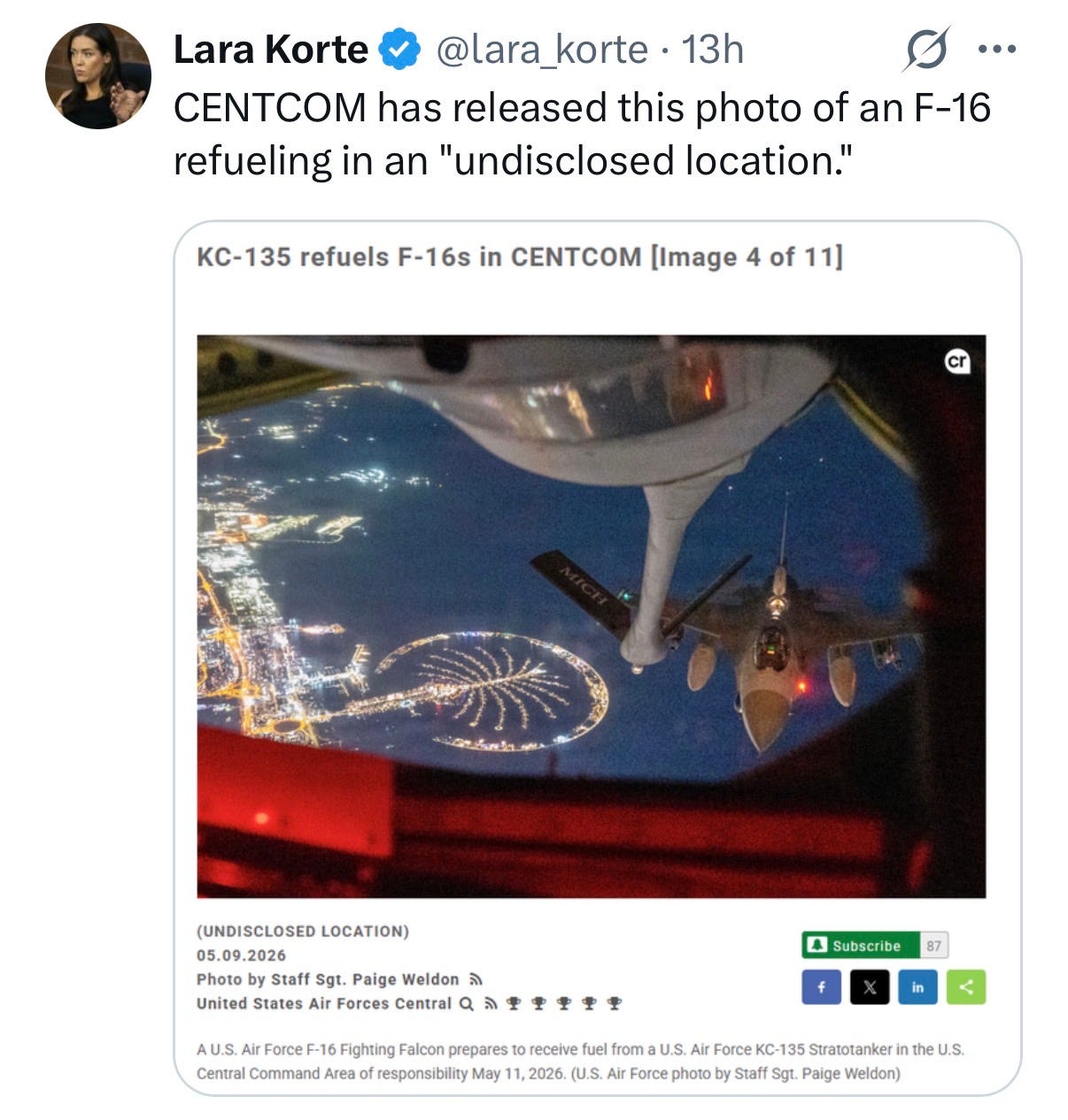
Keep Building,
BOF
Regarding the BBG(X), I agree that the ship in its current form is not mature enough. It relies too heavily on speculative and immature technologies, such as the electromagnetic railgun. Ultimately, the physical size of a warship predicates the size, height, and power output required to enable its radar to operate effectively.
For this reason, I strongly believe large surface combatants are vital to future force composition. That said, the BBG(X) design is both enormous and enormously expensive. Projections suggest that each vessel is likely to cost a similar amount to a Gerald R. Ford-class aircraft carrier—albeit minus the air wing and with a smaller crew, which translates to far lower life-cycle costs.
Instead, I think the Navy should invest in large warships built in the vein of the DDG(X) at around 13,000 tons. Specifically, I would recommend a cruiser class of around 12 to 16 ships displacing 18,000 tons light to 25,000 tons at full load. This high mass could host a massive Vertical Launch System (VLS) capacity, expansive power-generation capabilities, and immensely powerful radars and sensors, while still undercutting the BBG(X) by 15,000 to 20,000 tons in displacement.